Several leaders in the National Writing Project--Paul Oh, Elyse Eidman-Aadahl, and Troy Hicks--joined us from Washington DC where
they were working to lobby members of Congress today, Thursday, March 31.
Also Chad Sansing, Zac Chase, and Andrea Zellner joined us on the Skype conversation--as well as many friends in the chat. Chad has been organizing a
blogging effort going on around the country. Here’s what he is asking
supporters of the NWP to do:
Please add your voice to the chorus of educators from around the country who are blogging in support of the NWP.
We’re trying to accumulate 1,000 blog posts by April 8, when the next
Continuing Resolution for the federal budget expires. There are already
nearly 150 posts - moving stories of the impact of the NWP on the lives
of teachers and students - at the archive: http://coopcatalyst.wordpress.com/2011/03/15/the-blog4nwp-archive/ You can tweet or email your blog post URL to Chad Sansing (twitter: @chadsansing; email: csansing@gmail.com)
who has been organizing this effort, or post it to this discussion and
we’ll make sure it gets added to the archive. Remember to try to tag
your posts with: #blog4nwp. FYI, we’ve gotten a few responses on
twitter to this effort from the press office of the Department of
Education (see: http://www.andrea-zellner.com/archives/629 and http://aetweets.wordpress.com/2011/03/25/blog4nwp-and-being-bossy/), so let’s keep it up!
Check out what folks have written to get an idea of what you might add
but more importantly take a few minutes to add your story (stories).
Listen to find out what we can do to help restore funding to the National Writing
Project. Then find your own ways to add your voice the the the chorus singing praises to the
National Writing Project!
Click Read more to see a copy of the chat that was happening during the webcast.
This episode of Teachers Teaching Teachers, was recorded during a live webcast back in the middle of February. We think you will enjoy this conversation with William Kist and Mike Slowlinski, one of the teachers who is featured in William Kist's new book, The Socially Networked Classroom: Teaching in the New Media Age. Troy Hicks has a thought-provoking question to ask toward the end of this podcast as well. Get the book, and learn along with all of us.
William Kist is an associate professor at Kent State University, where he teaches undergraduate and graduate courses focused on adolescent literacy. He has been a middle school and high school English teacher; a Language Arts and Social Studies curriculum coordinator; and a consultant and trainer for school districts across the United States. Kist has over 30 national and international conference presentations and 10 published articles to his credit, including his book The Socially Networked Classroom: Teaching in the New Media Age (2010, Corwin Press.). In addition to his work in education, Kist has worked as a video/film producer and musician. Kist is editing one independent feature film, Summer’s Journey, and is developing his original screenplay, Field Trip, to be filmed as an independent feature in 2008.
This podcast is another in a series of Teachers Teaching Teachers shows to feature the authors of a recent outcrop of books on new media and literacy (Using Technology to Improve Adolescent Writing: 186. Copyright Clarity: 184, 135, The Digital Writing Workshop: 172, 171, 170, Teaching the New Writing: 157, 156, 155, Teaching Writing Using Blogs, Wikis, and other Digital Tools: 138) Perhaps we have the makings of a new discipline here, or at least a budding new branch on the tree of academic inquiry. See the National Writing Project's list at Teaching Now: Digital Writing Books. What would you add to this list? Let us know by adding a comment below.
Click Read more to see a copy of the chat that was happening during the webcast.
This podcast is another in a series of Teachers Teaching Teachers shows to feature the authors of a recent outcrop of books on new media and literacy (Copyright Clarity: 184, 135, The Digital Writing Workshop: 172, 171, 170, Teaching the New Writing: 157, 156, 155, Teaching Writing Using Blogs, Wikis, and other Digital Tools: 138) Perhaps we have the makings of a new discipline here, or at least a budding new branch on the tree of academic inquiry. See the National Writing Project's list at Teaching Now: Digital Writing Books. What would you add to this list? Let us know by adding a comment below.
Stephens and Ballast guide teachers in how to successfully implement technology for writing across the curriculum and create engaging lesson plans. They outline four frames of writing–inside writing, responsive writing, purposeful writing, and social action writing–and present student-centered and inquiry-based reading/writing lessons to connect real-world writing to content area standards. The result is a state-of the-art resource for helping teachers teach every student to write inside and outside of the classroom.
Liz Campbell Stephens teaches graduate courses in Educational Technology and is Director of the Office of Educator Preparation at Texas State University-San Marcos. She serves on the National Writing Project’s Board of Directors and was Director of the Central Texas Writing Project for 11 years. She co-authored Technology, Reading, and Language Arts and has written numerous chapters and papers on technology and literacy. Liz is former high school English teacher and brings that experience to her work as a teacher educator, federal programs director, and consultant. Her research has centered on literacy, technology, and teacher education.
Kerry Ballast is a Teacher Consultant for the Central Texas Writing Project and a secondary English language arts teacher with 14 years classroom experience. She has worked with students in grades 6-12 to explore various forms of writing, both traditional and digital. Currently, she works for the Texas Education Agency.
We were also joined by English teacher, Joel Malley who teaches at Cheektowaga Central School District, near Buffalo, NY. Joel is also the Tech Liaison for the Western New York Writing Project at Canisius College. Troy Hicks had a couple of things to say as well. Troy is the director of the Chippewa River Writing Project at Central Michigan University.
Click Read more to see a copy of the chat that was happening during the webcast.

Our friend and colleague, Chris Sloan, from the Wasatch Range Writing Project in Utah invited Renee Hobbs and Troy Hicks to join us on this week’s Teachers Teaching Teachers. (By the way, if you would like to plan and produce (and later edit) a TTT webcast like Chris did for this episode, please email Paul Allison or Susan Ettenheim.)
Here’s how Chris Sloan describes his thinking for the live webcast:
The authors of “Code of Practices for Fair Use in Media Education” might just as well be describing me, when they write, “Most ‘copyright education’ that educators and learners have encountered has been shaped by the concerns of commercial copyright holders, whose understandable concern about large-scale copyright piracy has caused them to equate any unlicensed use of copyrighted material with stealing.” While the Code of Best Practices in Fair Use for Media Literacy Education was published more than a year ago, I still have questions about how it applies to my own teaching and to my students’ digital compositions. And I don’t think I’m alone either. So I thought having a chat with Renee Hobbs and Troy Hicks, two people who’ve thought a lot about this, might help me (and other teachers like me) think through the copyright doctrine of fair use.
We asked Renee to talk about her background, how she got to this place where she is, a media educator at Temple University. In November 2008, educators were introduced to the “Code of Best Practices in Fair Use for Media Literacy Education, by Renee Hobbs, Peter Jaszi, and Patricia Auferheide. We also asked her how and why the three of them created this code? Troy Hicks wrote a book The Digital Writing Workshop and an article “Transforming our understanding of copyright and fair use”. Given that he had written a book that advocates how to teach digital writing, we are happy to have his thoughts on Renee’s work during this podcast.
At the end of the section, “What is transformative use?” Troy writes: “If we as educators can invite our students to think critically about their use of copyrighted materials in the process of creating their own digital compositions, and help them understand what it means to build on the work of another in a transformative way, then we can open up thought-provoking discussions about how we compose in the 21st century.” Can you say more about that Troy? How does that look in your own teaching?
Now some teachers might not think that this document pertains to them because we might not all understand the title and/or the concept of “Fair Use,” but one of the things I notice pretty quickly about the document (on page 2) is that media literacy is often embedded in other subject areas. Additionally the description of Media Literacy Education seems to describe what students do in Youth Voices a lot of the time, and what more students will be doing the more they create digital compositions.
ML is the capacity to access, analyze, evaluate, and communicate messages in a wide variety of forms
ML responds to the demands of cultural participation in the 21st century
ML like all literacy includes both receptive and productive dimensions
media can influence beliefs, attitudes, values, behaviors and the democratic process
The Guide addresses… “the transformative use of copyrighted materials in media literacy educations that can flourish only with a robust understanding of fair use…. The Supreme Court has pointed out that fair use keeps copyright from violating the First Amendment…. Fair use helps ensure that people have access to the information they need to fully participate as citizens. The fair use doctrine allows users to make use of copyrighted works without permission or payment when the benefit to society outweighs the cost to the copyright holder.”“for any particular field lawyers and judges consider expectations and practice in assessing what is ‘fair’ within that field. So in essence we’re talking specifically about fair use in an educational setting, about how fair use applies to student digital compositions published on the Internet – Youth Voices.The Fair use Doctrine (section 107) of the Copyright Act of 1976 states that the use of copyrighted material “for purposes such as criticism, comment, news reporting, teaching (including multiple copies for classroom use), scholarship, or research” is not infringement.In weighing the balance at the heart of fair use analysis, judges refer to four types of considerations mentioned in the law.
the purpose of the use
the nature of the copyrighted work
the amount and substantiality of the portion used in relation to the original work
and the effect of the use on the market for the original
In recent years, legal scholars have found that courts return again and again to two questions in deciding if a particular use of a copyrighted work is a fair use
did the unlicensed use “transform” the material taken from the copyrighted work by using it for a different purpose than that of the original, or did it just repeat the work for the same intent and value as the original?
was the material taken appropriate in kind and amount, considering the nature of the copyrighted work and of the use?
Applying the doctrine of fair use requires a reasoning process, not a list of hard-and-fast rules. It requires users to consider the context and situation of each use of copyrighted work. So we want you to join us. We’ll present a couple of cases from our work on Youth Voices.
Click Read more to see a transcript of a chat that was happening during the webcast.
In this final episode of our three part series, our guest-host once again is Troy Hicks, author of The Digital Writing Workshop, and Director of the Chippewa River Writing Project at Central Michigan University. He continues an exploration of the principles and practices described in the book.
For this third episode, we welcomed three teachers to the conversation. They discuss how they teach students to craft their writing through conferring and response:
Melissa Pomerantz of Parkway North High School in St. Louis, Missouri, describes how she uses audio feedback to respond to students through virtual conferences.
Heather Lewis of Waverly Middle School in Lansing, Michigan, discusses how she guides students through the revision process with Google Docs.
Joe Belino, a teacher of English to Speakers of Other Languages at Montgomery County Public Schools in Gaithersburg, Maryland, talks about the ways in which his students offer response to one another through the use of Google Docs.
As this series concludes, we invite all listeners to continue the conversation by joining the Digital Writing Workshop Ning and follow us on Twitter.
Click Read more to see a transcript of a chat that was happening during the webcast.
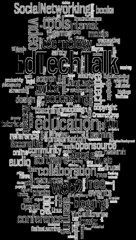
Do you have your EdTechTalk stuff yet? Did you know there are T-shirts, hats, coffee mugs, buttons, magnets, and tote bags available? They're all based on Wordle interpretations of the EdTechTalk Delicious tags.
What are you waiting for? These are limited edition items. Shop now and avoid the rush!
Recent comments
50 weeks 6 days ago
51 weeks 6 days ago
1 year 1 day ago
1 year 3 weeks ago
1 year 3 weeks ago
1 year 11 weeks ago
1 year 21 weeks ago
1 year 22 weeks ago
1 year 22 weeks ago
1 year 24 weeks ago