Skip to Content

Writing

TTT#320 Visioning New Curriculum K12OnlineConf. w/ Karen Fasimpaur, Paul Oh, Christina Cantrill, Sue King Bonita Deamicis 10.24


62:27 minutes (42.88 MB)

On this episode of TTT, we re-mix Karen Fasimpaur's Keynote for the K12 Online Conference strand: Visioning New Curriculum.

Paul Allison's profile photoSue King's profile photoPaul Oh's profile photoKaren Fasimpaur's profile photoChris Sloan's profile photoChristina Cantrill's profile photomonika hardy's profile photoBonita Deamicis's profile photo

Welcome to day one of the 2012 K-12 Online Conference! All presentations are listed and linked on our main conference schedule.

Presentation Title: Visioning New Curriculum

Presentation Description: This keynote session by Karen Fasimpaur for the “Visioning New Curriculum” strand talks about the unique opportunities presented by Common Core, digital tools, openness, and innovation. The time for one-size-fits-all, top-down curriculum is over. This session gives examples of curriculum that is personalized, real world, iterative, and collaborative. It is time for a new era in curriculum — one that is digital, open, innovative, and built by and for our community. This video includes reflection questions which can be explored collaboratively athttps://p2pu.org/en/groups/k12-online-2012/ The ideas in this video were developed collaboratively with a group of many people much smarter than me. Thanks to everyone who played along. This process was a testament to the power of collaboration and of creation as way to reflect and learn.

iPod video http://blip.tv/file/get/K12online-VisioningNewCurriculum681.m4v

mp3 audio http://blip.tv/file/get/K12online-VisioningNewCurriculum464.mp3


-----------------------------------------------------------------------

Link to presentation’s supporting documents

https://p2pu.org/en/groups/k12-online-2012/content/visioning-new-curriculum-strand/

Additional InformationP2PU K12 Online group – https://p2pu.org/en/groups/k12-online-2012/

Maker Faire – http://makerfaire.com

Junior FIRST LEGO League –http://www.juniorfirstlegoleague.org

Supercomputing Challenge – http://www.challenge.nm.org

National Writing Project – http://www.nwp.org

Youth Voices – http://youthvoices.net

NanoWrimo – http://www.nanowrimo.org

P2PU – http://www.p2pu.org

Common Core State Standards – http://www.corestandards.org

SETDA “Out of Print: Reimagining the K-12 Textbook in a Digital Age” – http://setda.org/web/guest/outofprint

OER for K-12 – http://content.k12opened.com

PhET Simulations – http://phet.colorado.edu

YouthVoices curriculum challenges and grid – http://youthvoices.net/play


Click Read more to see the chat that was happening during this live webcast.


Teachers Teaching Teachers 247 High School-College Transition and the “Framework for Success in Post-secondary Writing” 5.18.11


66:16 minutes (15.17 MB)
On this week’s Teachers Teaching Teachers, we have some of our current and former students on the podcast to talk about the high school-college transition. We are also joined by a couple of National Writing Project teachers who have been involved with the “Framework for Success in Post-secondary Writing” that came out a few months ago. These frameworks include this amazing list that we invite you to explore:

Habits of Mind

The Framework identifies eight habits of mind essential for success in college writing—ways of approaching learning that are both intellectual and practical and will support students’ success in a variety of fields and disciplines:

  • Curiosity: the desire to know more about the world.
  • Openness: the willingness to consider new ways of being and thinking in the world.
  • Engagement: a sense of investment and involvement in learning.
  • Creativity: the ability to use novel approaches for generating, investigating, and representing ideas.
  • Persistence: the ability to sustain interest in and attention to short- and long-term projects.
  • Responsibility: the ability to take ownership of one’s actions and understand the consequences of those actions for oneself and others.
  • Flexibility: the ability to adapt to situations, expectations, or dema157118nds.
  • Metacognition: the ability to reflect on one’s own thinking as well as on the individual and cultural processes used to structure knowledge.

Our guests on this podcast include:
What is College Readiness in Writing? and How Do We Get There? 

Every year, we have far too many students like Ian. They aren’t the AP kids (though they might be), and they aren’t the students who fail our classes. They do OK, even sometimes receiving excellent grades in our high school classrooms. But when they get to college, they place into Developmental English classes, or worse (like Ian) they crash and burn and drop out of college. They fall off the bridge between high school and college. This site is devoted to local efforts to help more students graduating from high school place directly into college level writing classes, and importantly—do well in freshman composition. It is meant both as a resource and a professional community of practice dedicated to doing more to prepare our students for college and for helping these students do well once they are in college, for “college readiness” and “student success” in college are really two sides of the same coin.

  • Kirsten Jamsen whose affiliations include being the co-director of the Minnesota Writing Project. Kirsten 278172presented on the “Frameworks for Success in Postsecondary Writing” at the National Writing Project’s Annual Meeting in November, where she discussed the statement’s purpose, and recounted the process of composing it. We’ll ask her do some of that again. We’ll also use some of her questions from that session to guide our discussion on Wednesday evening: “What is your response to the statement? How might you use it to promote effective writing instruction at your school? How could this statement help you design thoughtful professional development?”
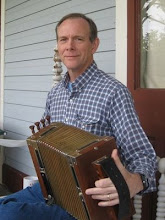
  • David Pulling whose students at Louisiana State University, Eunice, have been posting Musique+de+Bayou+Techeon Voices on the Gulf this year. David is the Director of Continuing Education at LSU Eunice, and will share his insights into what it takes to be a successful college writer as well. David is also an active member of the The National Writing Project of Acadiana.

Enjoy!

Click Read more to see a copy of the chat that was happening during the webcast.


Teachers Teaching Teachers #246 - Quakestories - Updates from Japan: Kim Cofino, Eric Bossieux, Mary Fish, David Bantz - 5.4.11


47:56 minutes (10.97 MB)

Every few weeks, since the 72256687_dbeb50d63fMarch 11th earthquake, tsunami, and ongoing nuclear crises in Japan, we've been checking in with a few teachers there.

On this episode of Teachers Teaching Teachers we are joined once again by Kim Cofino who gives us us a general update on her own, her students' and colleagues', and her neighbors' responses to the crises. Kim also describes “quakestories,” a project she started along with Mary Fish, who also joins us from her school in Japan on this episode of TTT.

Another teacher from Japan and self-described “change agent,” Eric Bossieux, joins us once again, and a colleague of Paul Allison’s at East-West School for International Studies, David Bantz brings his perspective as well. David is a Japanese language teacher who had just returned from a trip to Japan a week before this webcast.

Click Read more to see a copy of the chat that was happening during the webcast.

Teachers Teaching Teachers #243 - Donovan Hohn on Moby Duck & Alice Barr on what you are doing this summer - 4.13.11


59:59 minutes (13.73 MB)

Teachers are learners at heart. We’ve got full time jobs, rooms full of hormonally-driven teens, stacks of papers to grade – yet we still find time to write and to learn ourselves. On this episode of Teachers Teaching Teachers, we hear from two inspirational teachers, Donovan Hohn and Alice Barr.

Donovan Hohn’s writing has appeared in Harper’s Magazine, The New York Times Magazine, Outside, and The Moby DuckMoby Duck Best Creative Nonfiction, Vol. 2. A former New York City English teacher, he is now the features editor of GQ. He lives in New York with his wife and sons. You may have heard his interview with Terry Gross on NPR on March 29, 2011, where he talked about his experiences writing his first book, Moby Duck.

Alice Barr, our colleague at Seedlings, is the Instructional Technology Coordinator at Yarmouth High School, Yarmouth, Maine, a Google Certified Teacher and Adjunct Professor at the University of Southern Maine. She mentors faculty and students on 1:1 laptop integration and is network administrator and webmaster. People ask her all the time what’s available this summer and she wanted to share her own upcoming courses so she launched and twittered a Summer 2011 PD Opportunities page that has already become an amazing shared resource as we begin to think about upcoming opportunities to learn something new or share what we have learned. Add your plans at http://alicebarr.blogspot.com/p/summer-2011-professional-development.html

Enjoy this conversation!

Click Read more to see a copy of the chat that was happening during the webcast.

Teachers Teaching Teachers #205 -Three teachers from Louisiana talk about a dull ache - 2nd in a series - 06.16.10


45:36 minutes (10.44 MB)

Obama seems to have missed another opportunity in a major address that he gave about the BP oil spill last month (June 15). Earlier he was right to call the Gulf Oil Disaster our environmental 9/11. Both are life-changing disasters that have many of us asking where we need to stop compromising.

On Teachers Teaching Teachers this summer, we are asking what needs to change in our schools and in our lives as teachers. We hope that Thomas L. Friedman’s comments in May 2010 won’t be the last word on the 9/11 comparison. “Sept. 11, 2001, was one of those rare seismic events that create the possibility to energize the country to do something really important and lasting that is too hard to do in normal times.”

On this episode of Teachers Teaching Teachers, we talked about what we can do now that we might not have done before this disaster or failure. This is the second of a series of shows we will be doing on the Gulf oil disaster.

In the previous podcast (TTT 204), we had a thoughtful, productive conversation with history teacher Diana Laufenberg about responses in our curriculum to the Gulf Oil Disaster.  One of her ideas was to set up Skype connections for our students with people in Gulf states to personalize and more deeply understand the impact of this ongoing disaster. To move this idea forward, we were joined by teacher-consultants from the Southeastern Louisiana Writing Project  — Carolyn Kirk, Tasha Whitton, and Ellen Steigman — on this podcast.

On this podcast, we wre also be joined by teachers Matt Montagne and Andrea Zellner — two of our favorite angry, young environmentalists!

Won’t you join us too? We will continue our conversations about what needs to change all summer on Teachers Teaching Teachers. We want to know what you are thinking. Join us in the chat room or get ready to join us on Skype at http://EdTechTalk.com/live at 9:00pm Eastern / 6:00pm Pacific USA Wednesdays / 01:00 UTC Thursdays World Times

Click Read more to see a copy of the chat that was happening during the webcast.

Syndicate content